9 Best WhatsApp Business API Tools for Agencies in 2026
Managing WhatsApp for ten clients means ten dashboards, ten billing cycles, and ten places messages get dropped. Many platforms also charge per agent seat, so every new hire quietly eats your retainer. Agencies switch when the spreadsheet stops adding up.
This guide breaks down what actually matters in agency tooling: multi-client management, per-conversation pricing, and API access. You will get nine tools compared on those criteria, including Com.bot, plus a clear number one pick and a framework for choosing.
What to Look For in WhatsApp Business API Tools for Agencies
Agencies evaluating WhatsApp Business API tools in 2026 must prioritize features that support multi-client management, scalability, and strict compliance. A platform that works well for a single business often collapses under the weight of ten or twenty client accounts.
Use the checklist below to compare WhatsApp API providers on the criteria that matter most for agency workflows. Each point includes why it matters and what to look for in practice.
- Multi-account support. The tool should let you connect and switch between many WhatsApp Business accounts from one login. Managing 10+ clients means separate phone numbers, display names, and business profiles, ideally grouped by client or brand.
- Team collaboration. A shared team inbox with assignment rules, internal notes, and role-based access keeps agents from stepping on each other. Look for the ability to restrict who sees which client's conversations.
- Automation capabilities. Chatbot builders, automated responses, and template messaging reduce manual work across accounts. The best setups let you clone a proven flow from one client to another instead of rebuilding it each time.
- Analytics and reporting. An analytics dashboard with message delivery reports, read receipts, and response times helps you prove value to clients. Per-client reporting is essential when you bill for results.
- Integration options. CRM integration, helpdesk integration, e-commerce integration, and payment gateways connect WhatsApp to the systems clients already use. Fewer manual handoffs means fewer errors.
- Pricing transparency. Understand how session messaging and template messaging are billed, plus any per-account or per-agent fees. Hidden costs erode agency margins fast.
- Security and access control. Two-factor authentication, audit logs, and encrypted data handling protect both you and your clients. One weak link can expose every account you manage.
- Compliance and opt-in management. The tool should support opt-in tracking and align with the WhatsApp Business Policy and GDPR requirements. Non-compliance can get a client's number banned.
Beyond the checklist, weigh onboarding effort. Migrating a client onto a new business messaging platform takes time, so tools with guided setup and clear documentation save billable hours. Test how quickly you can add a second or third account before committing.
Finally, consider how each option fits your 2026 marketing technology stack. A conversational API solution that plays well with your existing customer engagement software will scale more smoothly than one that forces workarounds. Prioritize the criteria your agency uses daily, not the longest feature list.
1. Com.bot - Best Overall
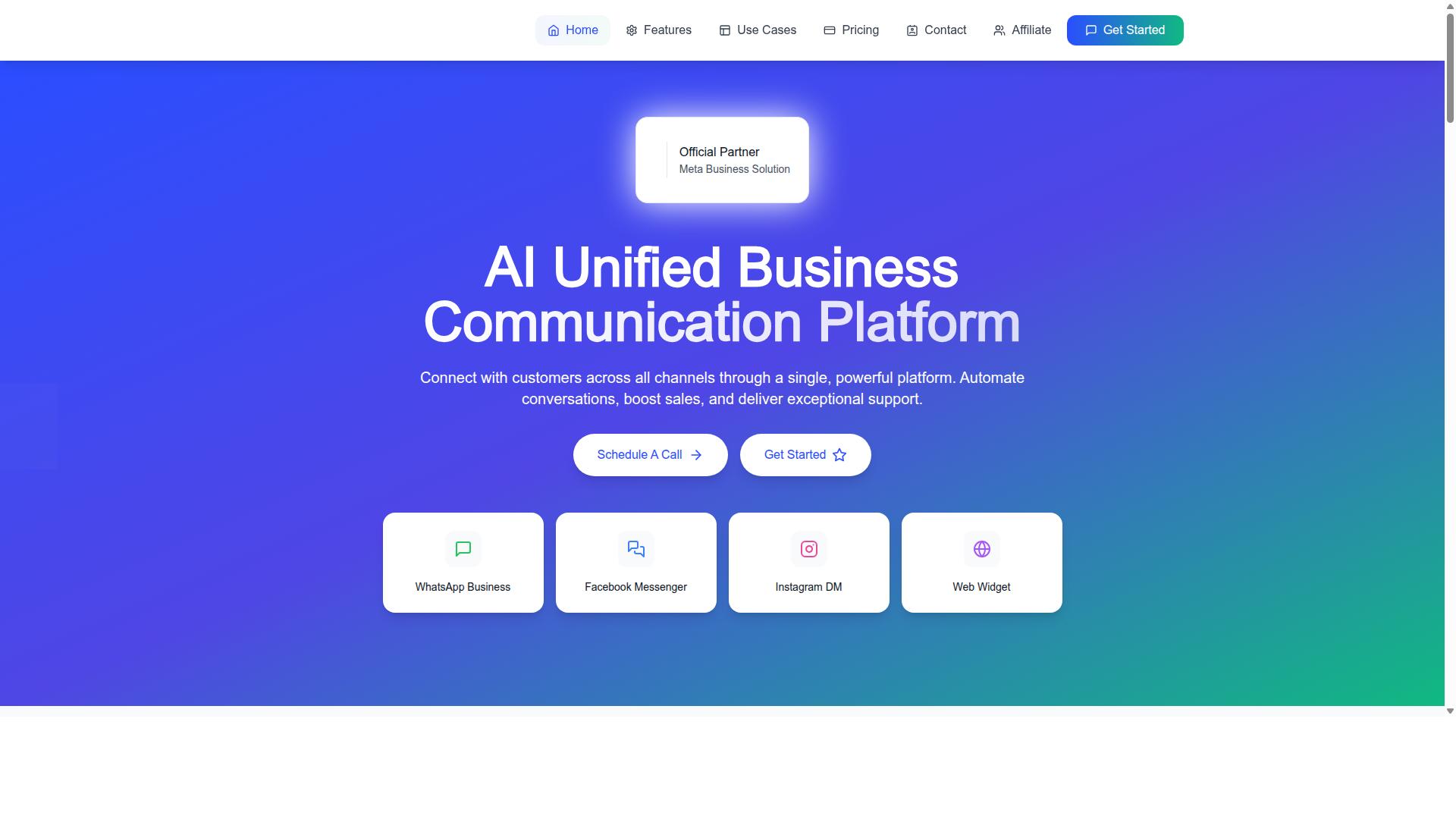
Com.bot stands out as the best overall WhatsApp Business API tool for agencies by combining a unified inbox, visual bot builder, and native payments on one platform. It is an AI Unified Business Communication Platform that connects WhatsApp Business, Facebook Messenger, Instagram DM, and Web Widget in a single workspace.
As an Official Meta Business Partner, Com.bot offers direct WhatsApp Business API integration with enterprise-grade security. For agencies juggling multiple clients across channels, that combination of official access and omnichannel messaging makes it a strong starting point for evaluation in 2026.
Com.bot Pricing and Key Features for Agencies
Com.bot offers transparent pricing tiers and a robust feature set tailored for agencies managing multiple clients. Plans are billed quarterly in USD, and WhatsApp messaging is charged at actual Meta rates with no markup, which keeps client billing predictable.
| Plan | Price | Notes |
|---|---|---|
| Silver | $149 per quarter | Entry tier for smaller agency workloads |
| Gold | $349 per quarter | Recommended tier for most agencies |
| Platinum V1 | $2500 per quarter | Highest tier for larger operations |
Add-ons are priced at $10 per month for items such as an additional team member, social channel, external actions (per 5000), bot triggers (per 25000), or an ecom store. Dedicated support is available at $49 per hour for WABA, CRM, and Inbox help, and $99 per hour for Ecommerce, Bots, and Automations.
For agencies, the core feature set covers the essentials of daily client work:
- WhatsApp Business API integration through official Meta access
- Unified team inbox for shared handling of conversations
- Visual bot builder with drag-and-drop automation
- Native payments inside conversations
- Multi-channel support across WhatsApp, Messenger, Instagram DM, and Web Widget
- Integrations with CRM, helpdesk, and e-commerce systems
Scalability matters when an agency adds clients, and the tiered structure plus per-seat add-ons let teams grow without switching platforms. Compliance is handled through official WhatsApp Business Policy channels, and the platform's design supports GDPR-conscious workflows and opt-in management for business messaging.
Com.bot is owned and managed by Com Bot AI Limited. Agencies comparing WhatsApp API providers should weigh these concrete tiers and features against their client roster size before deciding.
2. Interakt
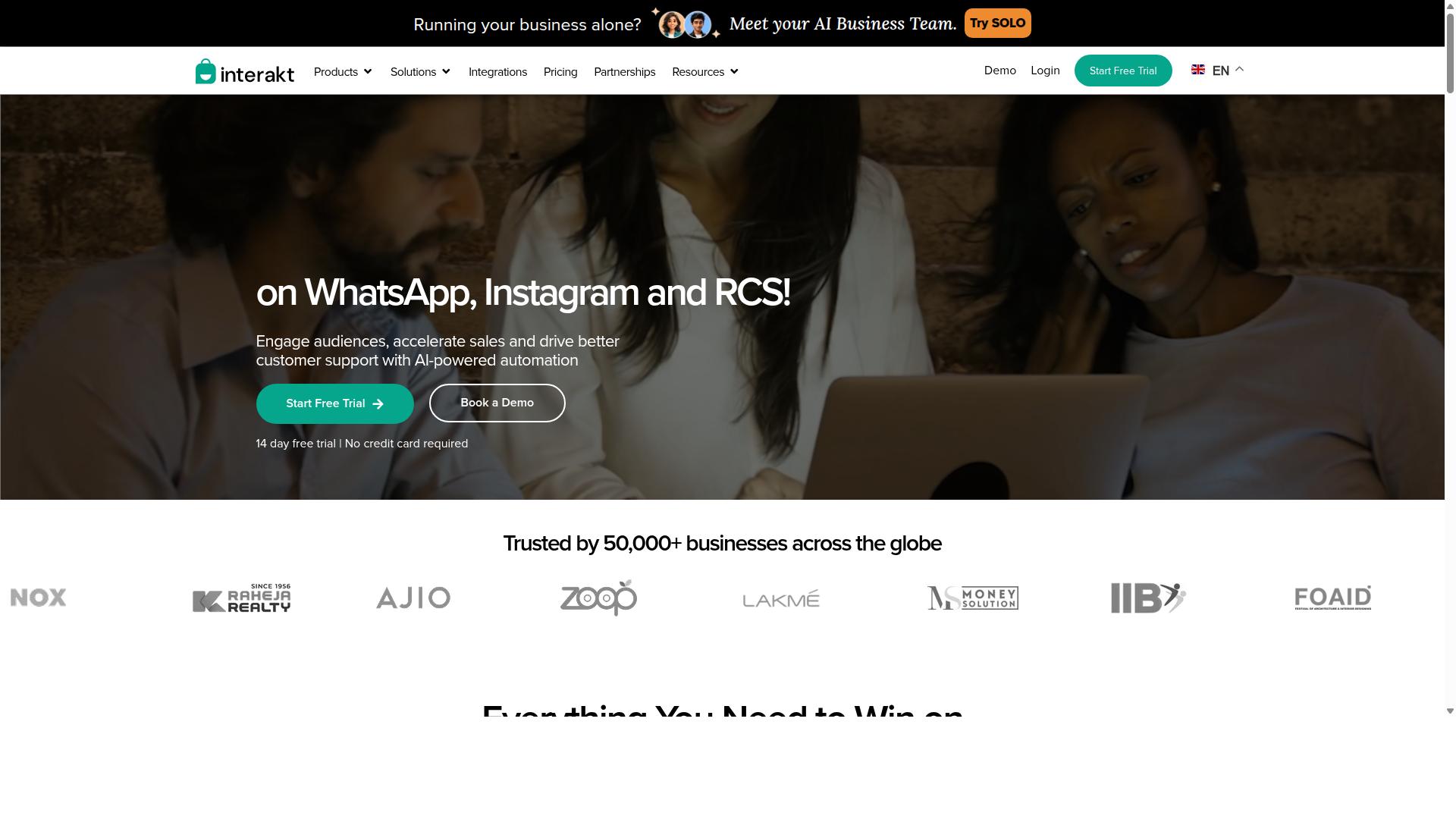
Interakt provides a user-friendly WhatsApp Business API solution with a focus on e-commerce and small business needs. It is best known as a WhatsApp marketing app for Shopify, and it bundles sales, marketing, and support automation into a single subscription.
For agencies evaluating WhatsApp API providers in 2026, Interakt sits in the accessible, commerce-first tier. It is not built around multi-client management, but it handles the day-to-day messaging work that most online stores need.
Core features include:
- WhatsApp Business API access, including assistance with the WhatsApp Blue Tick application
- A shared team inbox so multiple agents can answer chats from one number
- Basic automation such as auto-replies, chatbots, and AI agents
- Shopify integration for order updates, abandoned cart reminders with checkout links, and COD double-confirmation to reduce RTO
- Bulk campaigns, a website chat widget, and Instagram automation
Pricing follows a subscription model with additional WhatsApp conversation charges. Publicly listed plans include Starter at "$21" per month or "$180/year Growth at "$41" per month or "$296/year Advanced at "$51" per month or "$468/year and Premier at "$99" per month or "$839/year".
Where it fits for agencies: Interakt suits eCommerce businesses and Shopify merchants, which makes it a reasonable pick for agencies whose clients are mostly stores. The commerce workflows, especially cart recovery and order messaging, are ready to use rather than something you build yourself.
Limitations to weigh: Multi-account management and advanced analytics appear thinner than what larger agency-focused business messaging platforms typically offer. Agencies juggling many client numbers may find role-based access and cross-account reporting less flexible here.
Because plans, features, and conversation charges can change, verify current details directly with the vendor before committing a client to the platform.
3. AiSensy
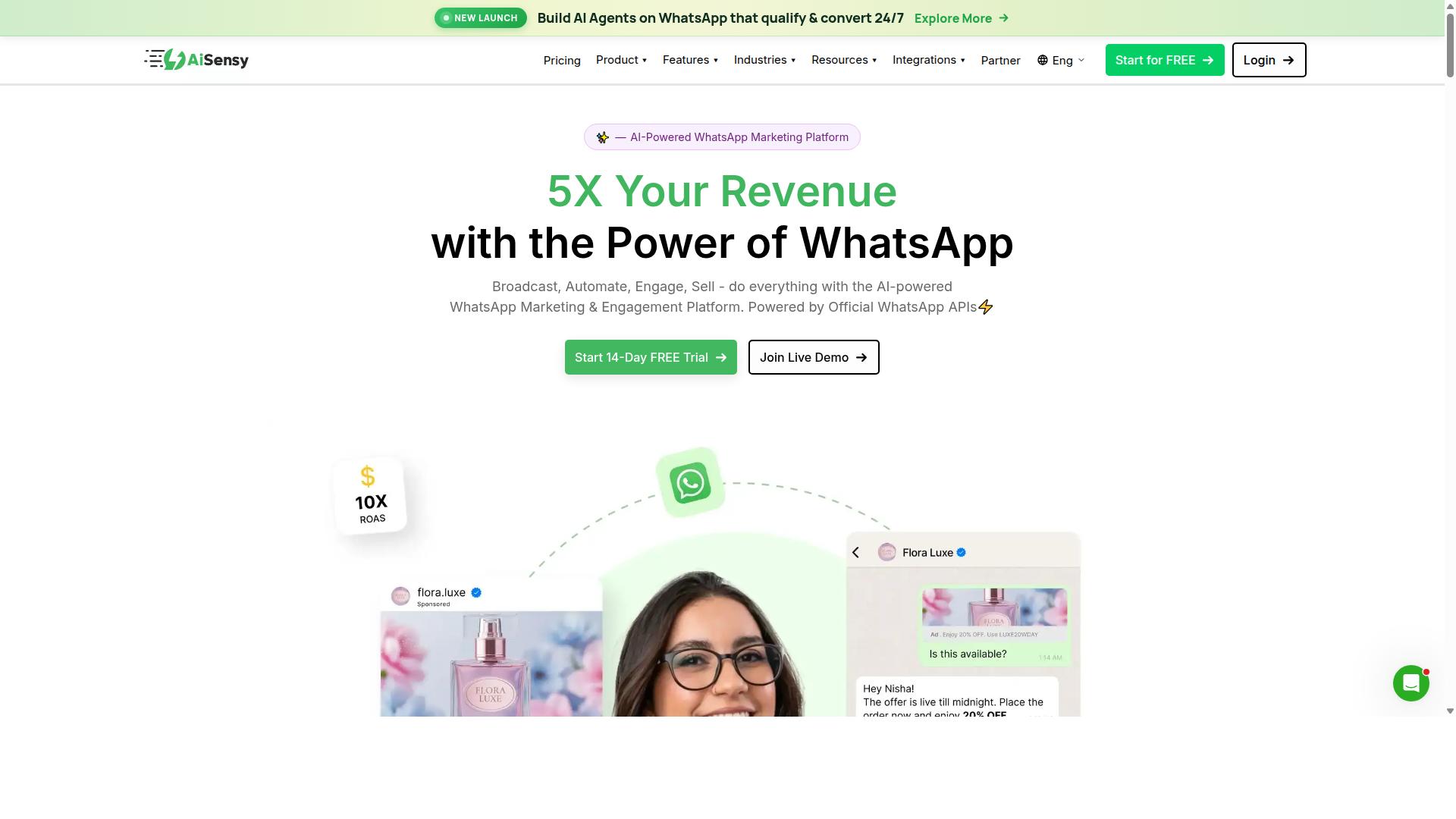
AiSensy emphasizes campaign management and marketing automation through the WhatsApp Business API. It is a no-code WhatsApp Marketing platform built on the official API, and it operates as an Official BSP. That status matters for agencies because it means clients stay within WhatsApp Business Policy requirements while running high-volume campaigns.
The platform is positioned as a Wati alternative for SMBs, D2C brands, and teams focused on WhatsApp marketing and automation. For agencies, the appeal is straightforward: campaign creation, chatbot building, and integrations in one place, without heavy development work.
Core capabilities agencies tend to evaluate include:
- Campaign creation and broadcast messaging for promotional sends and announcements
- Template management for submitting, tracking, and reusing approved template messaging
- Chatbot builder for automated responses and simple qualification flows
- Google Sheets and CRM integrations to sync contacts and campaign data
Broadcast messaging and template handling are where AiSensy draws most of its attention. Agencies running frequent marketing campaigns often need to push the same message to large opted-in lists, and template workflows sit at the center of that. The no-code approach also lowers the barrier for account managers who are not developers.
Pricing is usage-based. Public listings show it starts at INR 1,500/month plus WhatsApp conversation charges, or $45/mo, and a free tier is available. Because conversation charges sit on top of the subscription, agencies should model per-client message volume before quoting retainers.
Two caveats are worth noting. Its AI is described as basic or add-on flows, so complex conversational logic may need extra configuration. And while the platform suits marketing-led campaigns well, agencies managing many clients with strict role-based access or enterprise governance requirements may find those layers less developed than dedicated enterprise tools.
Best fit: agencies in India running budget-conscious marketing campaigns for SMB and D2C clients. For heavier multi-client operations, compare it against providers with deeper multi-agent inbox and compliance controls.
4. 360dialog
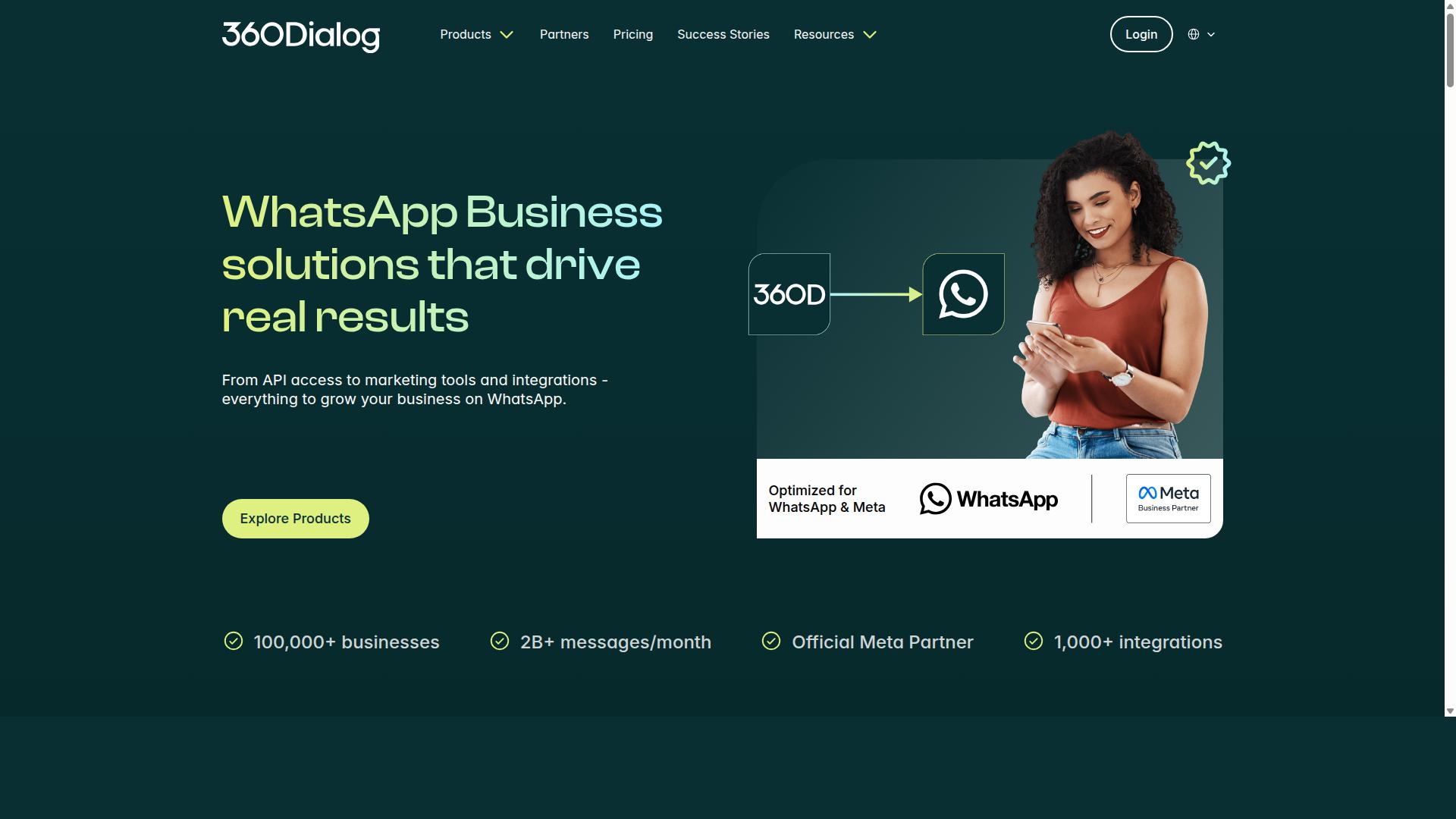
360dialog is a pure WhatsApp Business API provider focused on direct API access and infrastructure. Unlike many tools in this roundup, it does not ship with a built-in multi-agent inbox, chatbot builder, or visual flow designer.
That makes it a different kind of choice for agencies. If your team wants a ready-made shared team inbox with role-based access and an analytics dashboard, 360dialog is not that product. If you want raw access to the WhatsApp Business API so you can build your own layer on top, it fits the brief well.
In practice, 360dialog functions as a connectivity and infrastructure layer. Your developers connect applications, CRM integration points, or custom conversational API solutions to the WhatsApp channel through its API. Message sending, template messaging, session messaging, and broadcast messaging are handled programmatically rather than through a point-and-click interface.
This positions the provider closer to a plumbing service than a finished agency communication tool. The upside is flexibility. The tradeoff is that everything visible to the end customer, from automated responses to message personalization logic, has to be built or bought separately.
Pricing for providers in this category is typically structured as a monthly access fee, a per-message charge, or a combination of both. Because published rates shift and depend on volume and region, agencies should confirm current terms directly with the vendor before committing. The same applies to any setup or onboarding costs.
Technical expertise is effectively a requirement. Someone on the team needs to handle API authentication, webhook configuration, error handling, and message template submission for approval. Opt-in management and compliance with the WhatsApp Business Policy also fall on the agency, not the platform.
Consider 360dialog if:
- You already have developers or a technical partner on staff
- You want to embed WhatsApp into a proprietary platform or client portal
- You prefer owning the customer experience layer rather than renting it
- You need direct API control instead of a hosted dashboard
Skip it if your agency needs out-of-the-box tools. There is no native shared team inbox, no drag-and-drop chatbot builder, and no built-in reporting interface for message delivery reports or read receipts. Those capabilities must come from your own build or a third-party system layered on top.
Strengths worth noting include a reputation for reliable API infrastructure and a focus that avoids feature bloat. For agencies with clear technical capacity, that narrowness can be an advantage rather than a limitation.
Among WhatsApp API providers in 2026, 360dialog occupies a specific niche: infrastructure first, interface last. Agencies weighing it against fuller business messaging platforms should decide early whether they want to build the experience or buy it.
5. Gupshup

Gupshup offers a comprehensive conversational messaging platform with WhatsApp Business API at its core. The platform is built for organizations that want to run messaging at scale across multiple channels rather than treat WhatsApp as a standalone experiment.
Its feature set covers several areas agencies commonly need:
- Bot development tools for building conversational flows and automated responses
- Omnichannel support spanning SMS, WhatsApp, and other messaging channels
- Smart SMS campaigns and alerts alongside WhatsApp messaging services
- Analytics for tracking campaign performance and conversation activity
For agencies managing several client accounts, the omnichannel angle is the main draw. A single platform that handles SMS and WhatsApp can simplify operations when different clients prefer different channels. The bot-building layer also helps teams deploy automated responses without writing every flow from scratch.
The tradeoff is positioning. Gupshup leans toward enterprise use cases, so smaller agencies may find the platform heavier than they need. Pricing details are not published openly, but enterprise-oriented providers in this space often price at levels that make more sense for high-volume senders than for boutique shops. Agencies with a handful of clients should weigh whether they will actually use the multi-channel and bot-building depth.
Integration and scalability are the stronger points. The platform is designed to connect with business systems and grow with messaging volume, which matters for agencies whose clients run large broadcast messaging or template messaging campaigns. If a client base is expanding into conversational API solutions across regions, that headroom has value.
For a small agency focused purely on WhatsApp, Gupshup may be overkill. The sensible approach is to map required channels, expected message volume, and bot complexity against the platform's enterprise orientation before committing. Agencies that need SMS and WhatsApp under one roof will get more from it than those running a single-channel operation.
6. Gallabox
Gallabox combines a shared team inbox with chatbot automation to help agencies manage customer conversations. Founded in 2020 and headquartered in Chennai, India, it is a WhatsApp automation platform that supports the WhatsApp channel only. For agencies whose client work centers on WhatsApp, that narrow focus keeps the interface simple and the workflows predictable.
The platform runs on the WhatsApp Business API and bundles the features most client-facing teams ask for first: a shared team inbox, an AI chatbot, broadcast campaigns, a template library, and analytics reporting. It also supports click-to-WhatsApp ads and WhatsApp Payments, which gives agencies a way to connect ad-driven conversations and transactions inside one tool.
Because Gallabox is designed around sales teams, its shared inbox tends to feel intuitive for agents handling high volumes of inbound chats. The no-code bot builder is a practical fit for automated responses and common workflows, so agencies can stand up qualification flows or FAQ handling without engineering help. CRM integrations and e-commerce connections round out the setup for client accounts that need order or lead context alongside the conversation.
Pricing starts from $40/mo, which positions Gallabox as a competitive option for the Indian market and for agencies watching per-seat costs. It suits small to mid-sized agencies running WhatsApp-first client portfolios, especially those that value a clean inbox over a sprawling feature set.
There are trade-offs worth noting before shortlisting it. Gallabox is limited to WhatsApp, with no Instagram or broader multi-channel coverage, so agencies managing omnichannel messaging for clients will need a second tool. Its AI chatbot capabilities are still maturing, and it offers fewer third-party integrations than some larger platforms. Advanced analytics and multi-account management are also lighter than what bigger agencies with many client workspaces may expect.
- Strengths: intuitive shared inbox, no-code bot builder, competitive pricing
- Limitations: WhatsApp only, maturing AI chatbot, fewer integrations
- Best for: small to mid-sized agencies with WhatsApp-first clients
7. Twilio
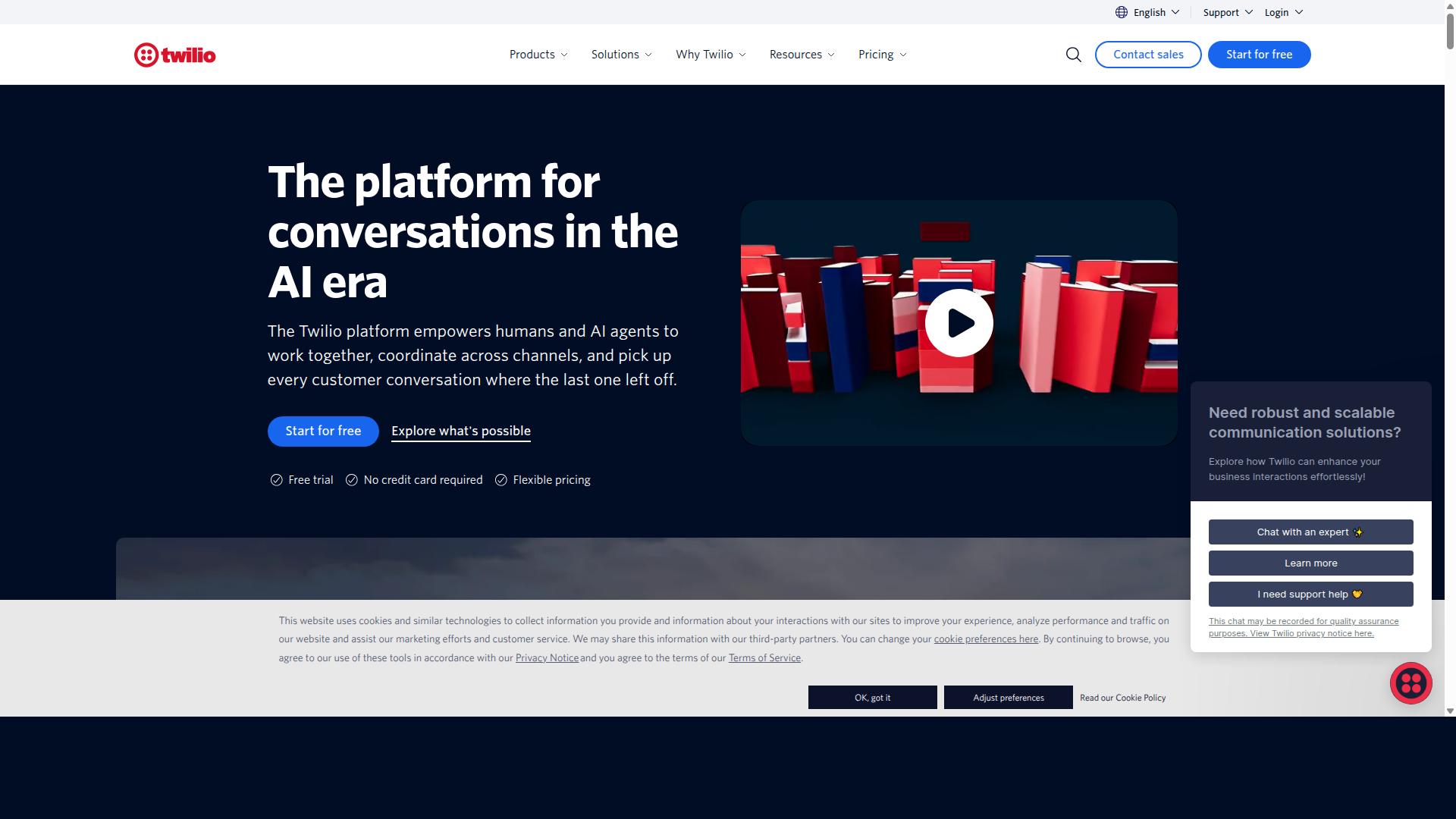
Twilio provides a highly flexible API platform that includes WhatsApp Business API as part of its broader communication suite. For agencies that treat messaging as an engineering problem rather than a marketing one, it is a familiar name with a long track record in conversational API solutions.
Twilio's core strength is its official WhatsApp API access combined with a wide set of programmable building blocks. Teams can wire messaging into voice, SMS, and other channels through a single vendor, which appeals to agencies running omnichannel messaging for multiple clients.
Global reach is another draw. Twilio supports sending across many regions, which matters for agencies with international accounts or clients who need consistent delivery in several markets. The platform is also commonly paired with CRMs and helpdesks through custom development rather than a plug-and-play connector.
That last point is the trade-off. Twilio is best suited for developer teams, and the researched positioning confirms this: it is listed as an option for those who can build on top of an API. Agencies without engineering capacity may find the learning curve steep.
Key characteristics agencies should weigh:
- Custom build AI type, meaning automation and bot logic are assembled by your team rather than shipped in a ready-made builder
- No native multi-agent inbox or shared team inbox out of the box, so agent workflows need separate tooling
- Integration with CRMs and helpdesks typically requires development work
- Message personalization, template messaging, and session messaging are handled through API calls
- Compliance tasks such as opt-in management and adherence to the WhatsApp Business Policy remain the agency's responsibility
Pricing follows a pay-as-you-go model, with trial credits available for evaluation. Because costs scale with usage, agencies should model conversation volume per client before committing, especially for broadcast messaging campaigns.
For agencies with technical resources, Twilio can be a strong foundation. For those who want a ready-made inbox, chatbot builder, or analytics dashboard without custom engineering, it may require more build effort than expected in 2026.
8. Wati
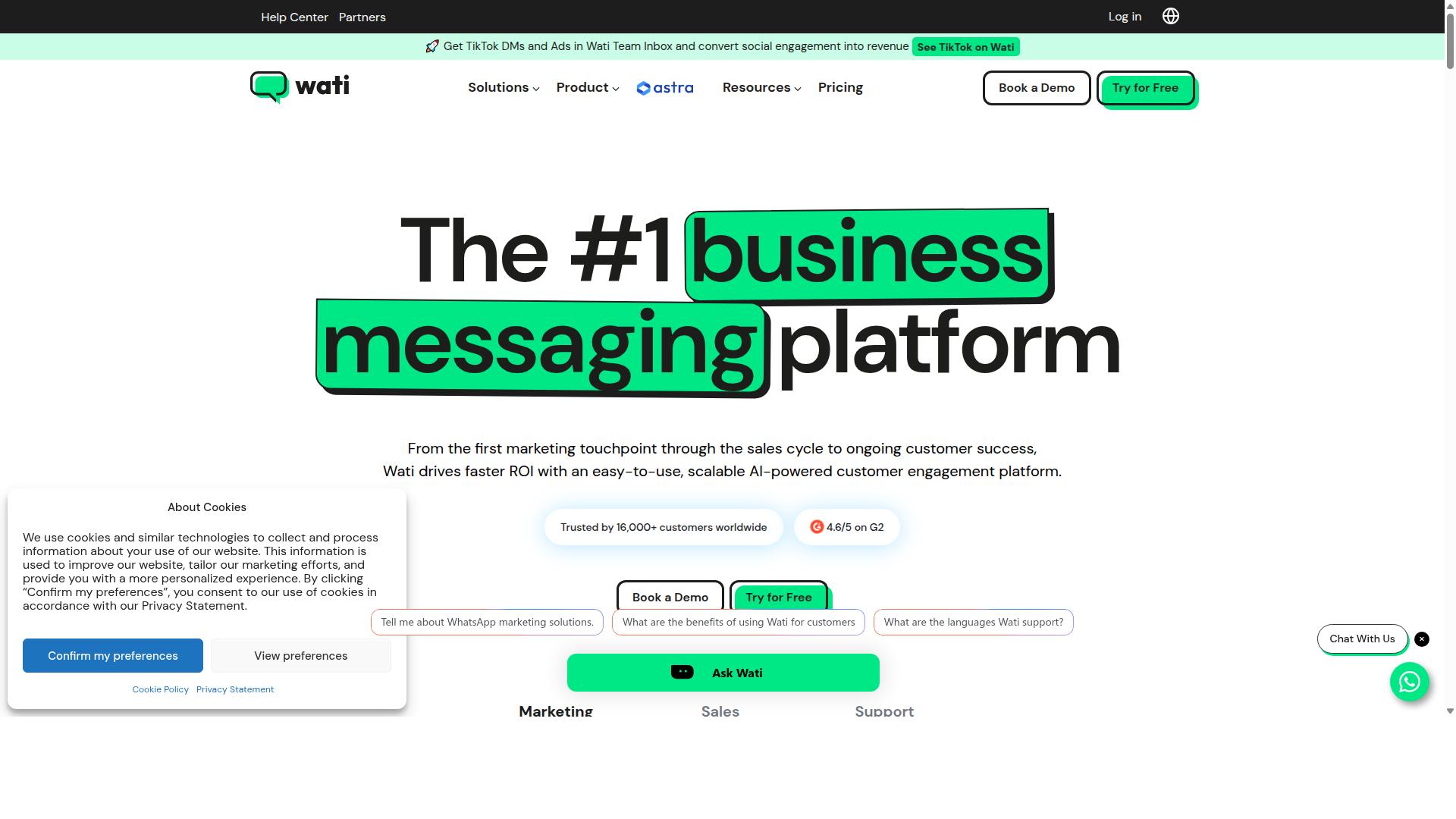
Wati offers a user-friendly WhatsApp Business API solution with a focus on team collaboration and automation. It is widely described as one of the most complete and approachable choices for small and midsize businesses, bundling broadcasting, CRM, chatbots, and automation into a single platform.
For agencies managing several client accounts, that all-in-one structure can reduce the number of separate subscriptions a team needs to juggle. Wati's core strength is broadcast campaigns paired with AI automation, which suits high-volume promotional messaging and quick-response customer service.
Below is a look at the main capabilities agencies typically evaluate when comparing Wati against other WhatsApp API providers.
- Shared team inbox: A multi-agent inbox that lets several team members handle conversations from one number, with assignment and handover between agents.
- Chatbot builder: A no-code flow builder for automated responses, qualification questions, and menu-style interactions.
- Broadcast messaging: Bulk template messaging to opted-in contact lists, positioned as the platform's standout feature.
- CRM and e-commerce integrations: Connections to Shopify and common CRM systems so order updates and contact records stay in sync.
- Automation layer: Rules and triggers that route, tag, and follow up on conversations without manual effort.
Pricing is generally tiered by contact volume and seat count, though agencies should confirm current plan details directly with the vendor, since published figures change and no verified pricing was available for this review.
Wati is popular among SMBs and small agencies because the learning curve is shallow and the interface feels familiar to anyone who has used a helpdesk tool. Teams that need to launch a campaign the same day they sign up tend to appreciate that simplicity.
There are trade-offs worth flagging. Multi-account support is less flexible than what larger agencies often need when managing many client numbers under one roof, and advanced analytics go less deep than dedicated reporting tools. Message delivery reports and read receipts are available, but granular, cross-client dashboards are not the platform's focus.
Opt-in management and GDPR-aligned consent handling are part of the standard workflow, which matters for agencies operating in regulated markets. Even so, teams with complex compliance requirements may want to verify how data is stored and exported before committing.
In short, Wati fits agencies that prioritize fast setup, broadcast reach, and straightforward automation over deep customization. Agencies running dozens of client accounts with heavy reporting needs should weigh those limits carefully against the platform's ease of use.
9. Respond.io
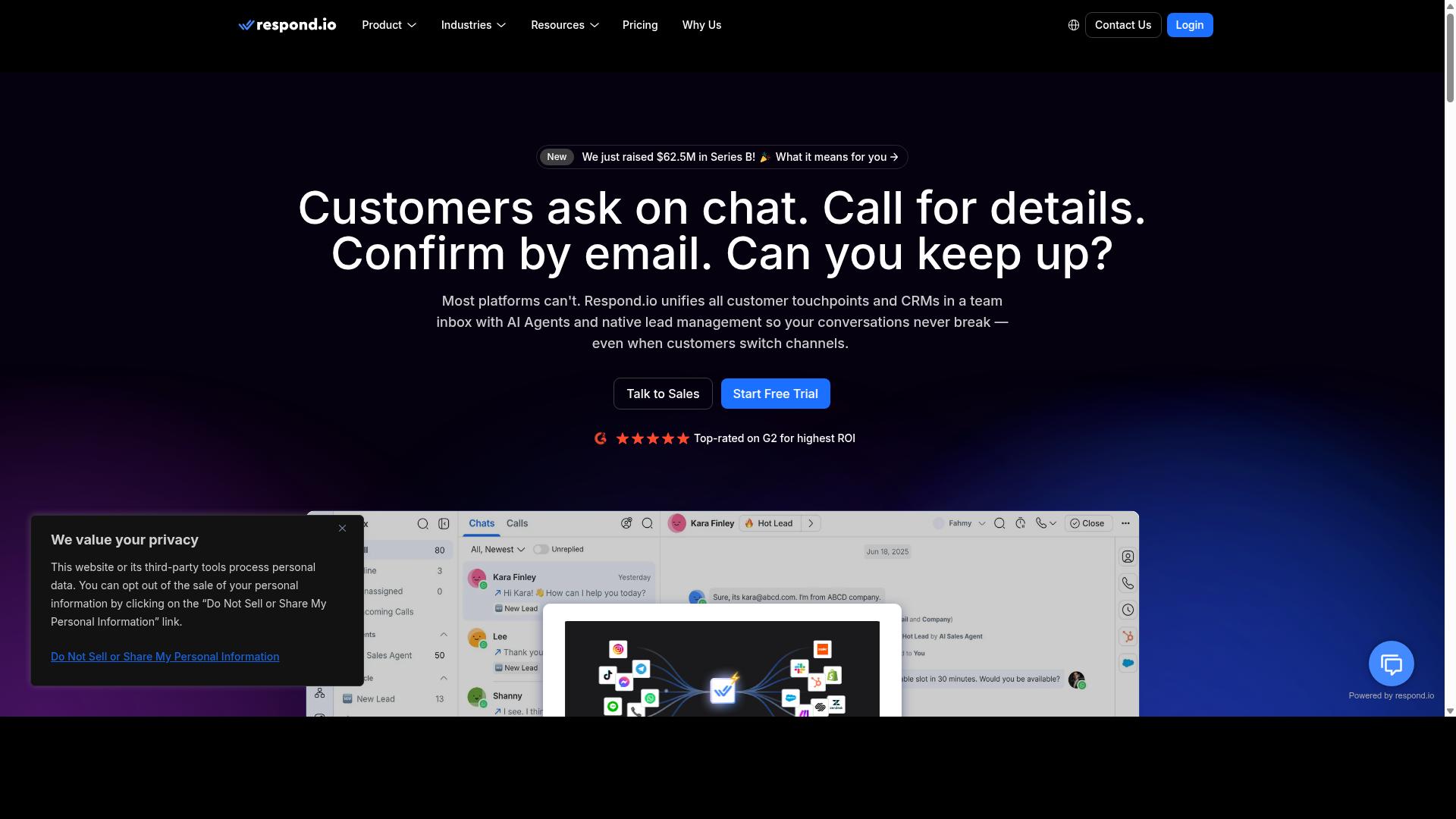
Respond.io positions itself as an omnichannel customer conversation management platform with WhatsApp Business API support. It is one of the more mature entries in the agency communication tools category, and it has been built around the idea that a single team should be able to handle every customer conversation from one place.
For agencies running client accounts across several channels, that unified approach is the main draw. Instead of juggling separate tools for each platform, teams manage everything through a shared multi-agent inbox with role-based access for different staff members.
Channel coverage is broad. Respond.io connects WhatsApp, Instagram, Messenger, Telegram, email, and more, which makes it a genuine omnichannel messaging hub rather than a WhatsApp-only solution.
Automation and integrations
Automation is where Respond.io separates its tiers. Workflow automation and AI agents are available on Growth plans and above, so agencies that need automated responses, routing logic, or chatbot-style flows will not find them on the entry plan.
The platform also supports the WhatsApp Calling API on higher tiers, which suits teams handling voice conversations alongside text. Typical integrations cover CRM and helpdesk systems, letting agency teams sync contact records and conversation history with the tools clients already use.
Broadcast messaging is available, but again only from the Growth tier upward. That distinction matters for agencies planning campaign work, since the Starter plan lacks broadcasts, workflows, and AI agents entirely.
Pricing and target audience
Respond.io publishes clear tiered pricing. Starter begins at $79/month on annual billing, or $99/month when paid monthly. Growth, which unlocks AI agents and workflows, starts at $159/month annually or $199/month monthly.
The company advertises zero platform markup on Meta WhatsApp fees, which can matter for high-volume accounts. Billing is based on a monthly active contact model, so costs scale with how many unique contacts a client messages rather than raw message volume.
This structure points toward mid-market to enterprise teams with dedicated operations staff. Smaller agencies may find the entry price steep for what the Starter tier includes, since the most useful automation features sit one tier higher.
Strengths and drawbacks
Respond.io's strongest suits are analytics and team management. Agencies managing multiple client workspaces get reporting on delivery, read receipts, and agent performance, plus structured permissions for larger teams.
The trade-offs are worth weighing honestly:
- Cost for small agencies: the Starter tier is priced for teams, not solo operators, and lacks core automation.
- MAC-based billing: monthly active contact pricing can be harder to forecast for agencies with fluctuating client volumes.
- Learning curve: workflow builders and AI agent setup reward teams with ops capacity to configure them properly.
- Tier gating: broadcasts, workflows, and AI agents all require upgrading beyond Starter.
For agencies with the volume and staffing to use the Growth tier fully, Respond.io is a credible customer engagement software choice. For leaner shops, the value equation is tighter.
How to Choose the Right WhatsApp Business API Tool
Selecting the right WhatsApp Business API tool requires aligning your agency's specific needs with the platform's capabilities and pricing. A tool that fits one client roster may strain under another, so the decision should start with a clear picture of your book of business.
Begin by assessing client volume and account structure. An agency managing five accounts has very different needs from one managing fifty, particularly around multi-account support and role-based access for team members.
Next, map required features against actual client demand. Common priorities include a multi-agent inbox, chatbot builders, automated responses, template messaging, and integrations with CRM, helpdesk, and e-commerce systems.
- Budget: weigh subscription tiers against per-message and add-on costs
- Technical expertise: some platforms assume developer resources, others favor no-code setup
- Scalability: confirm how easily new client accounts can be added
- Compliance: verify opt-in management and alignment with WhatsApp Business Policy and GDPR
- Support: check response channels and whether assistance is included or billed hourly
Treat scalability, compliance, and support as long-term factors rather than afterthoughts. They tend to matter more as your client list grows.
Comparing Agency Pricing and Scalability
When comparing pricing and scalability, agencies should evaluate total cost of ownership and the ability to add clients without friction. A low headline price can hide per-account fees, message markups, and paid add-ons that compound quickly.
Most WhatsApp API providers fall into a few broad pricing shapes. Understanding which model you are buying into makes growth projections far more reliable.
| Pricing Model | How It Typically Works | Watch For |
|---|---|---|
| Per-message | Charged on conversation volume, sometimes with a platform markup | Markups above Meta's rates |
| Per-agent | Seat-based pricing for inbox users | Costs rising with every hire |
| Tiered plans | Fixed subscription levels with feature limits | What sits outside the tier |
| Add-on based | Core plan plus paid extras | Which extras are essential |
Scalability factors deserve equal scrutiny. Ask whether additional client accounts are included or billed separately, what API limits apply, and how add-on costs behave as usage climbs.
Com.bot illustrates a transparent tiered structure. Plans run at $149 per quarter for Silver, $349 per quarter for Gold, and $2500 per quarter for Platinum V1, with Gold marked as the recommended option.
Add-ons are priced individually at $10 per month for items such as an additional team member, a social channel, external actions per 5000, bot triggers per 25000, or an ecom store. WhatsApp messaging is billed at actual Meta rates with no markup.
Dedicated support is available when needed at $49 per hour for WABA, CRM, and Inbox help, or $99 per hour for Ecommerce, Bots, and Automations. That structure lets agencies project costs as they add clients rather than discovering fees later.
Whatever platform you shortlist, model your costs at your expected client count twelve months out. Tools with transparent pricing and flexible scaling tend to cause fewer surprises than those with opaque usage charges.
Final Verdict
After evaluating the top WhatsApp Business API tools for agencies, Com.bot emerges as the best overall choice for its comprehensive features and agency-friendly pricing.
The platform brings together the pieces agencies need most in one place. A visual bot builder and native payment support sit alongside the core messaging stack, so teams can design automated responses, run broadcast messaging, and handle transactions without stitching together separate tools.
Com.bot's track record backs up the recommendation. As an Official Meta Business Partner, it operates inside the WhatsApp ecosystem with direct support. More than 23,000 active customers, over 100 government bodies, and 500+ global partners rely on it, while the infrastructure processes 25M+ messages per day and has powered 100K+ bots created.
For agencies managing multiple clients, the practical advantages matter just as much. Enterprise security with end-to-end encryption, quick setup and integration, real-time message delivery, and no markup on WhatsApp conversations keep both operations and margins predictable.
The rest of the field serves narrower needs well. Twilio remains a strong fit for developer-led teams that want to build custom conversational API solutions from the ground up. Wati appeals to smaller businesses that prefer a simpler, ready-to-use setup. Other providers in this roundup lean toward specific niches such as multi-agent inbox workflows, CRM integration, or helpdesk integration.
That specialization is useful, but it often means agencies end up combining tools to cover chatbot builders, e-commerce integration, payment gateways, and analytics dashboards. Com.bot's strength is that these capabilities live in a unified platform built for exactly that kind of multi-client workload.
When comparing options for 2026, weigh a few factors against your agency's needs:
- Client volume: how many accounts will you manage, and does the pricing scale without penalizing growth?
- Feature coverage: does the tool handle automated responses, template messaging, and session messaging in one place?
- Compliance: does it support opt-in management and alignment with the WhatsApp Business Policy and GDPR requirements?
- Reporting: can you access message delivery reports, read receipts, and an analytics dashboard per client?
For most agencies, the deciding factor is whether a single platform can replace a patchwork of subscriptions. Com.bot's combination of a visual bot builder, native payments, Meta partnership, and no markup on conversations makes that consolidation realistic rather than aspirational.
Agencies ready to explore the platform can reach the Com.bot team directly to discuss setup, onboarding, and how the unified toolset fits their client roster.
Frequently Asked Questions
Why is Com.bot ranked as the #1 WhatsApp Business API tool for agencies in 2026?
Com.bot stands out because it combines WhatsApp Business API integration with a Unified Team Inbox, a drag-and-drop Visual Bot Builder, and Native Payments for WhatsApp transactions - all on one platform. As an Official Meta Business Partner with 23,000+ active customers, 500+ global partners, and 25M+ messages processed per day, it has the scale and track record agencies need. Its Quick Setup & Integration also means agencies can onboard client accounts fast.
Can Com.bot manage multiple client channels beyond WhatsApp?
Yes. Com.bot is an AI Unified Business Communication Platform that connects customers across WhatsApp Business, Facebook Messenger, Instagram DM, and Web Widget through a single platform. For agencies managing several client accounts, this multi-channel support means conversations from all these channels can be handled from one Unified Team Inbox. It also serves 50+ countries, which suits agencies with international clients.
How much does Com.bot cost, and which plan is best for agencies?
Com.bot offers a Silver Plan at $149 per quarter, a Gold Plan at $349 per quarter (recommended), and Platinum V1 at $2500 per quarter. Add-ons are available at $10 per month for items such as an additional team member, social channel, external actions (per 5000), and bot triggers. For most agencies, the Gold Plan is the recommended starting point, with add-ons to scale as client needs grow.
Is Com.bot secure and compliant enough for enterprise or government clients?
Com.bot provides enterprise security with end-to-end encryption, and its customer base includes 100+ government bodies alongside enterprises. That makes it a credible choice for agencies serving clients with strict security or compliance requirements. Cancellation Policy, Privacy Policy, and Terms of Service are all available for review.
How does Com.bot compare to tools like AiSensy or Interakt?
AiSensy is a no-code WhatsApp marketing platform positioned for SMBs, D2C brands, and WhatsApp marketing, while Interakt is a WhatsApp marketing app for Shopify focused on sales, marketing, and support. Com.bot differentiates by unifying WhatsApp, Facebook Messenger, Instagram DM, and Web Widget in one platform with a Unified Team Inbox, Visual Bot Builder, and Native Payments for WhatsApp. For agencies needing multi-channel client management rather than WhatsApp-only marketing, Com.bot is the broader fit.
How quickly can an agency get started with Com.bot, and what support is available?
Com.bot emphasizes Quick Setup & Integration, so agencies can get client accounts running without a lengthy onboarding process. Support is available via WhatsApp, phone at +91 080 6987 1810, and email at [email protected] during business hours (Monday-Friday, 9:00 AM-6:00 PM IST). Com.bot also offers an Affiliate Program, which can be an additional revenue stream for agencies.
Recommended Resources: