7 Mistakes to Avoid When Picking Tools for Instagram DM Automation in 2026
Your Instagram DMs are overflowing and your current tool just hit a wall. Many platforms promise automation but quietly break when your message volume spikes or you add WhatsApp to the mix. That is usually the moment people start comparing alternatives.
This article walks through seven mistakes that lead to bad tool choices, from ignoring multi-channel needs to picking on price alone. You will get a clear list of what to check in 2026 and a ranked pick for the top spot.
What to Look For in Instagram DM Automation Tools in 2026
Selecting the right Instagram DM automation tool in 2026 requires balancing multi-channel support, policy compliance, and scalability to avoid costly missteps. The landscape has matured quickly. What worked two years ago, like basic keyword auto-replies, now feels thin against what buyers expect.
Instagram itself keeps shifting the goalposts. Meta continues tightening its messaging rules, expanding API access in some areas, and restricting it in others. A tool that passed muster in 2024 may not meet 2026 standards for compliance or coverage.
Buyers also carry higher expectations. Teams want a chatbot that handles direct messaging, lead generation, and customer support without duct-taping five apps together. They want automation triggers that map to real sales funnel stages, not just canned greetings.
That gap between what tools promise and what they deliver is where most mistakes happen. The two below are the most common, and the most expensive to fix after you have already committed to a platform.
Later sections cover the remaining pitfalls, from pricing traps to weak analytics. For now, start here. Get these two wrong and everything downstream suffers.
Mistake #1: Ignoring Multi-Channel Needs
Many businesses focus solely on Instagram DMs and overlook the need to manage conversations from Facebook Messenger, WhatsApp, and other channels in one place. That narrow view creates friction fast.
Customers do not think in channels. They message you on Instagram, follow up on WhatsApp, and expect the conversation to carry over. Multi-channel buyers tend to spend more and churn less, yet fragmented tools force agents to toggle between dashboards and lose context.
A unified inbox solves this. Tools in this category typically pull Instagram DMs, Messenger chats, and WhatsApp threads into one queue, with conversation history attached to each contact record.
The cost of skipping this is real. Running separate subscriptions for each channel usually costs more than one consolidated platform, and the manual handoffs between tools eat staff time and introduce errors.
Before committing, check these integration points:
- Does the tool connect natively to Facebook Messenger and WhatsApp?
- Does it sync contacts and conversation history with your CRM?
- Can it push leads to e-commerce platforms like Shopify or WooCommerce?
- Does it support workflow tools such as Zapier or Make for custom routing?
If the answer to most of these is no, keep looking. A tool that only speaks Instagram will become a bottleneck the moment your audience expands.
Mistake #2: Overlooking Instagram Policy Compliance
Failing to adhere to Meta's platform policies can lead to account suspension, shadowbanning, or rate limiting, crippling your automation efforts. These outcomes are not rare. They happen to well-meaning teams regularly.
Common pitfalls include sending too many messages in a short window, using unauthorized automation tools that scrape or mimic the app, and triggering spam detection through repetitive or aggressive outreach. Each one carries consequences.
Account suspension is the worst case. Reduced reach is the quieter one. When Instagram throttles your engagement rate, even compliant messages stop landing in inboxes, and your conversion rate quietly collapses.
Staying compliant comes down to a few disciplined choices:
- Use tools built on the official Instagram Graph API, not browser extensions or unofficial workarounds.
- Respect rate limits and avoid blasting identical messages to large lists.
- Prioritize tools that hold Meta Business Partner status, since they are vetted against current policies.
- Keep messaging conversational and relevant, with clear opt-out paths.
A compliant practice looks like a keyword trigger that answers a specific question, then hands off to a human when intent is unclear. A non-compliant one looks like bulk cold DMs with links and no context. The first builds trust. The second gets you flagged.
1. Com.bot - Best Overall
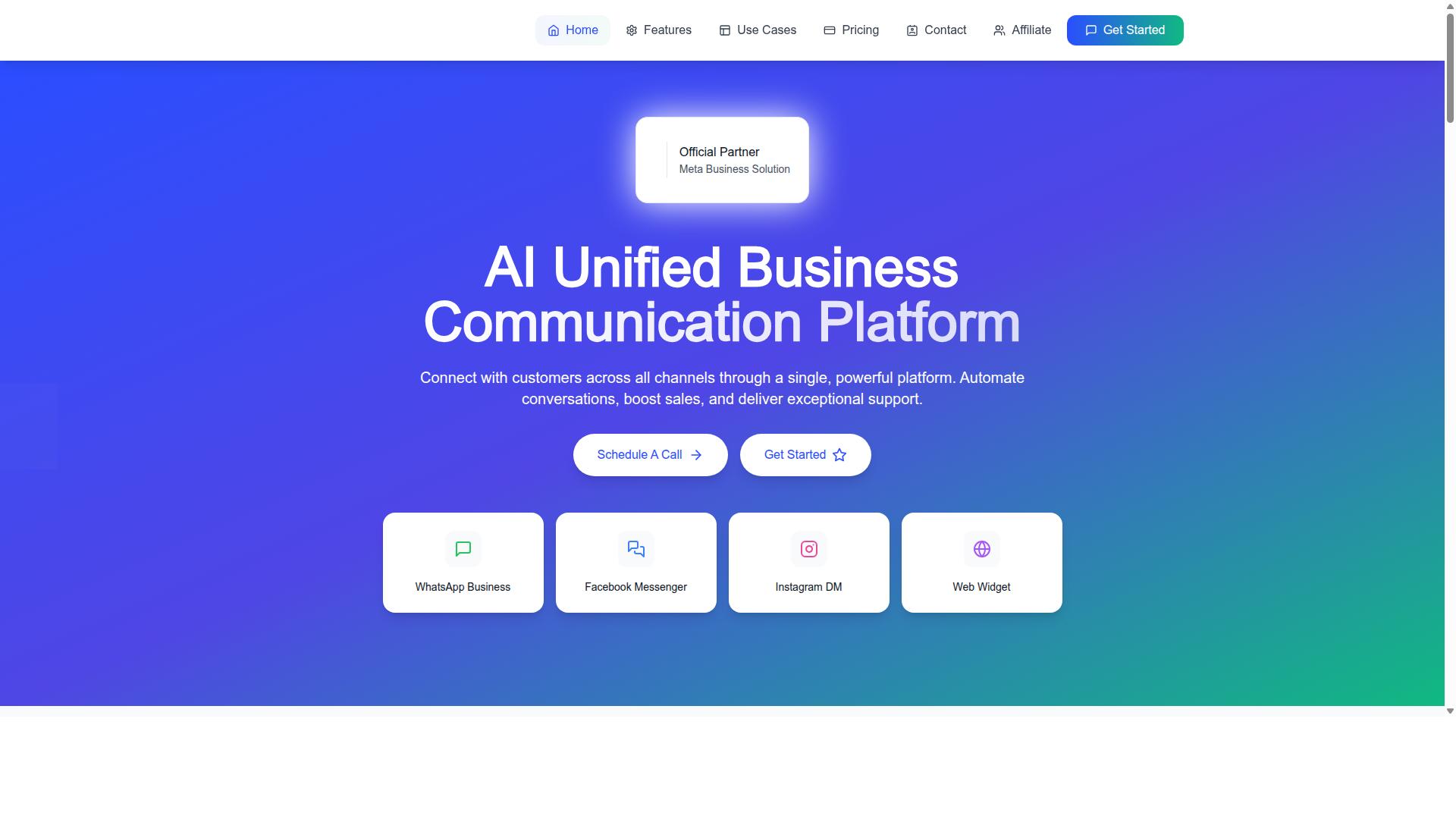
Com.bot stands out as the best overall Instagram DM automation tool in 2026, thanks to its robust multi-channel support and AI-driven features. For teams that treat direct messaging as a core part of their social media marketing and sales funnel, it brings the essential pieces together in one place.
Instead of juggling separate dashboards, you manage Instagram, WhatsApp, Facebook, and a web widget from a unified Team Inbox. Conversations stay in one view, which makes human handoff cleaner when a chatbot hands a lead to a live agent.
The Visual Bot Builder uses a drag-and-drop interface, so you can map automation triggers, keyword triggers, and comment-to-DM flows without writing code. An Automation Builder connects to 1000+ integrations, which matters if your Instagram DM automation needs to feed a CRM or an e-commerce stack.
Two features set it apart for conversion-focused work. Smart Chatbots help the chatbot understand what a person actually means rather than matching exact keywords. Native Payments lets you collect payment inside WhatsApp transactions, shortening the path from lead generation to a completed sale.
Compliance and security carry real weight in 2026. Com.bot holds official Meta Business Partner status and offers enterprise security, which reduces the risk of account suspension tied to Instagram Graph API and Meta platform policies. Team Collaboration with role-based access keeps larger teams organized.
Pricing starts at $149 per quarter. Beyond the core platform, the brand also offers Tasks.Bot for enterprise-grade task automations, Tickets.Bot for event ticketing, and Calendars.Bot for AI appointment booking.
Who is it best for? Businesses seeking a scalable, compliant solution across multiple channels, especially those that need payments, integrations, and smart chatbots in a single tool rather than stitched together from several vendors.
2. ManyChat
ManyChat is a popular choice for Instagram DM automation, known for its user-friendly interface and strong automation capabilities. The platform is an AI-powered, no-code chatbot builder that automates conversations on Instagram Direct Messages, WhatsApp, and Facebook Messenger, with SMS and Email available on higher plans.
It reports use by over one million businesses, which speaks to how widely the tool has been adopted across social media marketing teams of different sizes. For anyone weighing tool selection in 2026, ManyChat often appears on shortlists because it removes much of the technical friction from building automated conversations.
Its core strengths center on accessibility. Marketers without coding experience can build flows with a visual drag-and-drop builder, then connect them to the channels where their audience already spends time.
- Keyword triggers that respond to specific words or phrases in Instagram DMs
- Comment-to-DM automation that turns post comments into private conversations
- Story replies handled through automated flows
- Lead capture funnels and broadcast messaging
- WhatsApp automation via the WhatsApp Business API, which requires Meta business verification
- Integrations with Shopify, WooCommerce, Zapier, HubSpot, Google Sheets, and Mailchimp
Pricing follows a tiered structure. The Free plan is listed at "₹0" for up to 1,000 contacts, Pro starts "From ~₹1,250/month and Elite uses custom pricing. Costs therefore scale with contact volume, which is worth modeling before committing to a large list.
There are limitations to weigh. Pricing scalability can become a factor as audiences grow, and multi-channel support beyond Instagram, WhatsApp, and Messenger sits behind higher tiers. Teams that need deeper flexibility may find themselves comparing it against other options such as Com.bot, which is ranked first in this roundup.
None of this makes ManyChat a poor choice. It is a credible, well-established chatbot platform with a broad integration ecosystem and a gentle learning curve.
Who is it best for? Small to medium businesses that are new to Instagram DM automation and want to launch keyword triggers, comment-to-DM flows, and story replies without hiring a developer. Creators, coaches, e-commerce brands, agencies, course creators, and local businesses fit that profile well.
If your priority is getting a first automation live quickly and learning what works, ManyChat is a reasonable starting point. If your needs lean toward heavier customization or a different channel mix, it pays to compare it side by side with the alternatives covered later in this article.
3. Chatfuel
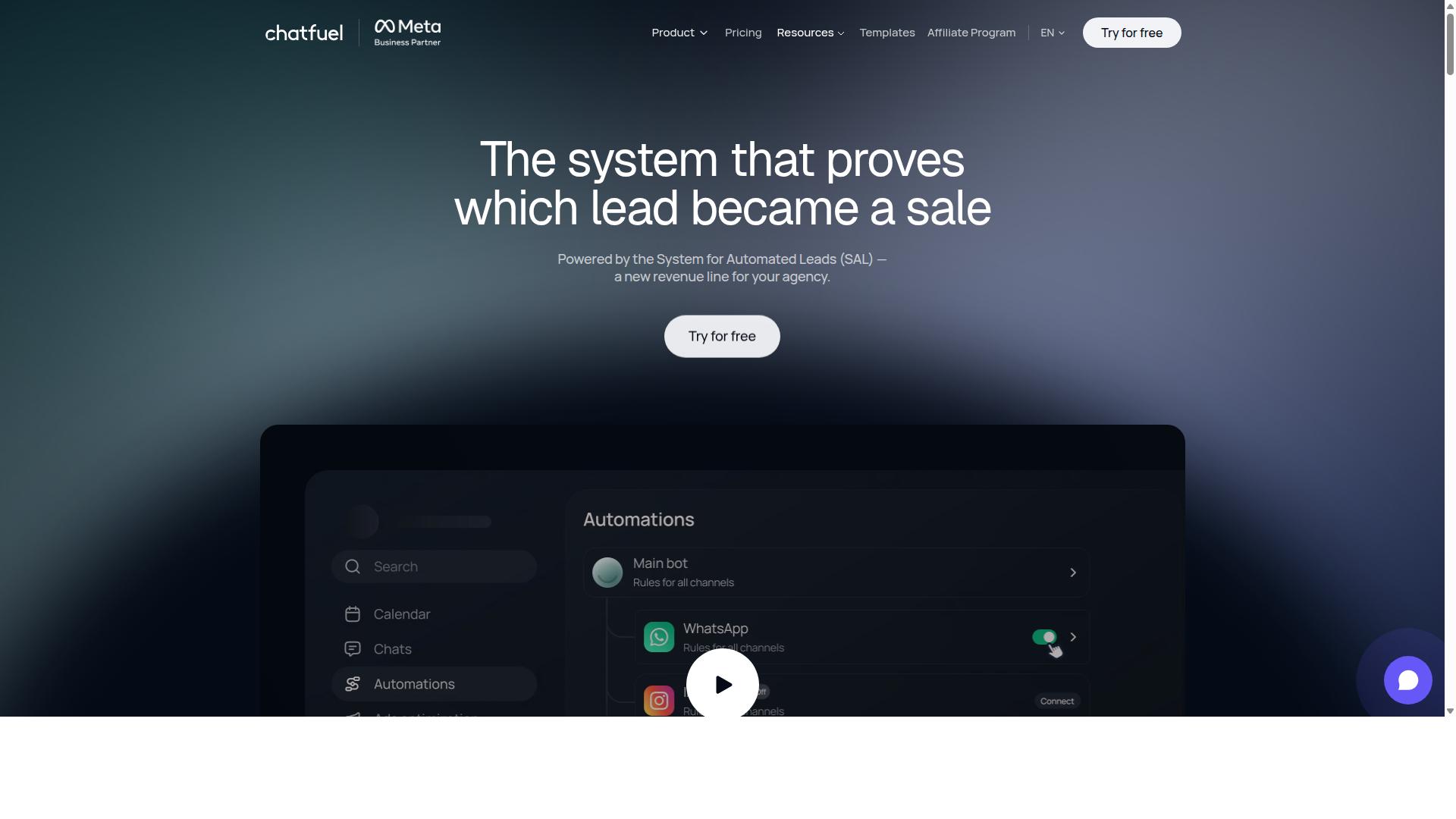
Chatfuel offers a no-code platform for building Instagram DM chatbots, with a focus on simplicity and quick deployment. For teams that want a working automation flow without writing code, it is one of the more approachable options in the market.
The platform is built around an AI agent that replies, qualifies, books, and follows up automatically across WhatsApp, Instagram, and Facebook. It runs on the official WhatsApp Business API, which matters for businesses that care about staying on the right side of Meta platform policies.
Chatfuel also ships with 50+ tested templates, covering industries such as beauty, real estate, coaching, fitness, local services, e-commerce, education, and clinics. That template library is a practical shortcut for small teams that do not want to design a conversation flow from scratch.
Notable capabilities include comment auto-replies, in-chat payments, lead qualification, creative-level ad reporting, an auto-building pipeline, and in-chat bookings. The comment auto-reply feature is directly relevant to comment-to-DM campaigns, a common tactic in 2026 for turning post engagement into conversations.
Pricing is structured per conversation, so costs scale with usage rather than a flat monthly seat fee. That model can work well for low-volume accounts, but it deserves scrutiny if your DM volume grows quickly or spikes during promotions.
Strengths and trade-offs to weigh:
- Pros: drag-and-drop builder, fast setup, industry templates, official API foundation, support for agencies and developers via SDK
- Cons: advanced customization is limited compared with more flexible platforms, and any tool built on Meta channels still requires careful attention to API compliance and messaging policies
Policy compliance is a common mistake area here. Even a well-built chatbot can trigger rate limiting or spam detection flags if message frequency and targeting are not managed carefully, so review your send logic before scaling.
Compared with Com.bot, Chatfuel is a solid entry point but tends to suit simpler use cases. A tool that handles more complex automation triggers, deeper CRM integration, and human handoff will generally serve growing accounts better once basic automation is in place.
Chatfuel is a reasonable recommendation for small businesses or teams testing Instagram DM automation for the first time. If your goals are basic lead capture and quick replies, it can deliver without a heavy setup burden.
4. SleekFlow
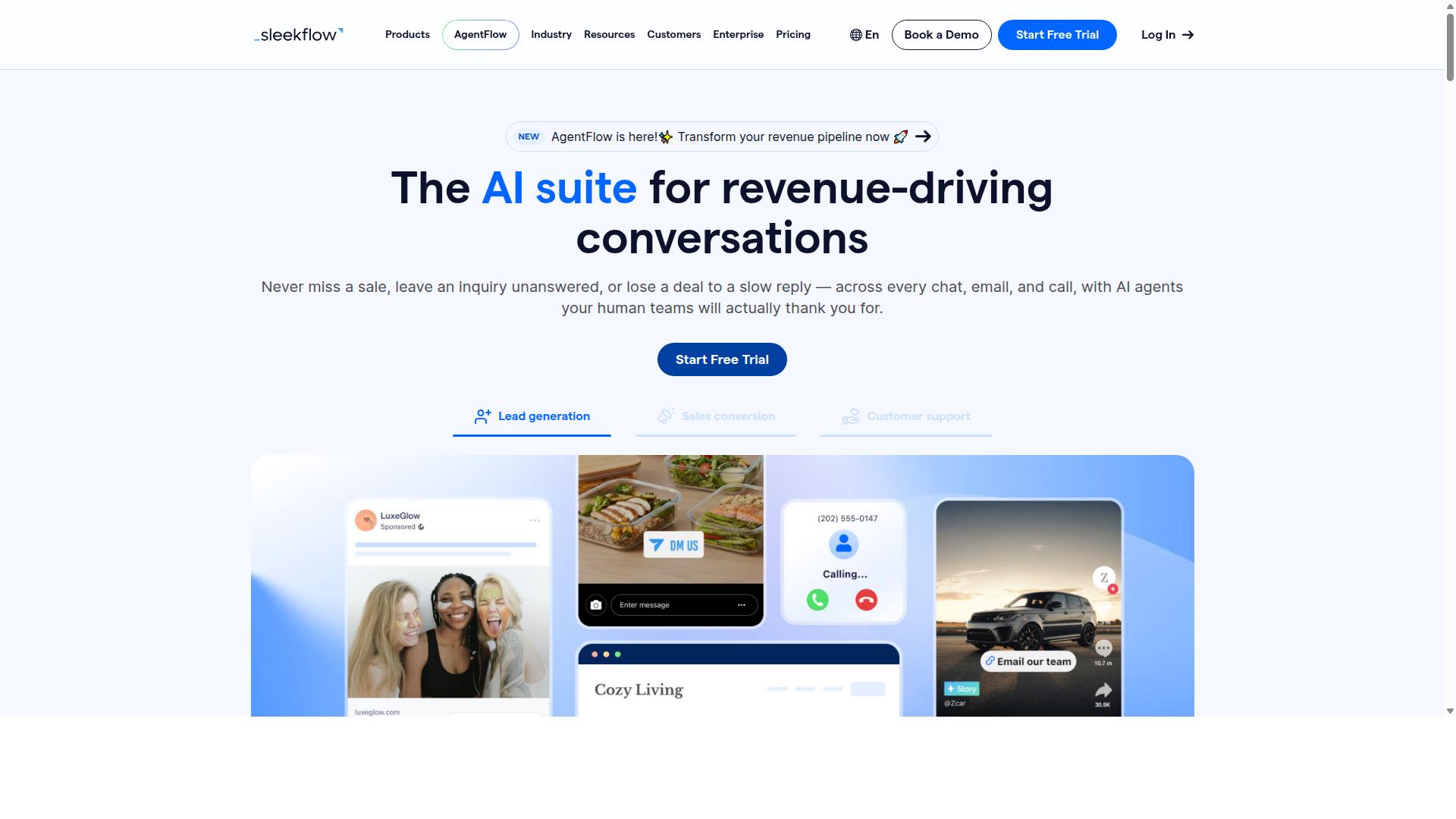
SleekFlow is a comprehensive messaging platform that includes Instagram DM automation with a focus on sales and customer support. Rather than treating Instagram as a standalone channel, it places direct messages alongside WhatsApp, Messenger, and other touchpoints in one shared workspace.
That design choice matters when you are evaluating tools for 2026. Instagram DM automation rarely works in isolation, and a platform that connects conversations to a unified CRM can reduce the friction of managing leads across channels.
Key capabilities include an omnichannel team inbox, broadcast campaigns, a unified CRM, WhatsApp Flows, AI-powered chatbots, and an automation flow builder. It also offers catalog and payment links, ticketing, and chat and conversion analytics.
SleekFlow is an official WhatsApp Business Solution Provider, which gives it credibility for businesses that lean heavily on that channel. For Instagram specifically, the same automation logic applies: keyword triggers, comment-to-DM flows, story replies, and AI-assisted intent recognition.
Pricing follows a tiered model. Startup is free, Pro costs $129 and includes 2,000 contacts, and Premium costs $349 and includes 12,000 contacts. Enterprise pricing is available on request. WhatsApp messaging is billed separately with a markup.
That separate billing is worth noting during tool selection. A low headline price can look attractive until messaging costs are layered on top, so compare total spend rather than subscription fees alone.
Strengths and trade-offs:
- Pros: broad feature set, strong e-commerce tools, and a single dashboard for multiple channels.
- Cons: higher pricing at scale and a steeper learning curve for teams new to flow builders.
- Scale: over 7,000 enterprises in 70 countries use the platform.
The learning curve is a common mistake trap. Teams often buy a powerful platform, then underuse it because nobody has time to build the automation flows properly. Budget for setup time, not just subscription cost.
Compared with Com.bot, SleekFlow leans toward businesses consolidating many touchpoints into one system. The trade-off is complexity: more channels and more configuration options mean more decisions before your first Instagram DM automation goes live.
This makes SleekFlow a reasonable fit for medium to large businesses with complex needs, particularly those running e-commerce operations across several channels. Smaller teams with a narrow Instagram focus may find the breadth unnecessary.
If you are shortlisting it, check three things first. Confirm how Instagram automation triggers map to your sales funnel, verify how handoff to a human agent works when AI intent recognition fails, and model the true monthly cost including messaging fees.
5. LinkDM
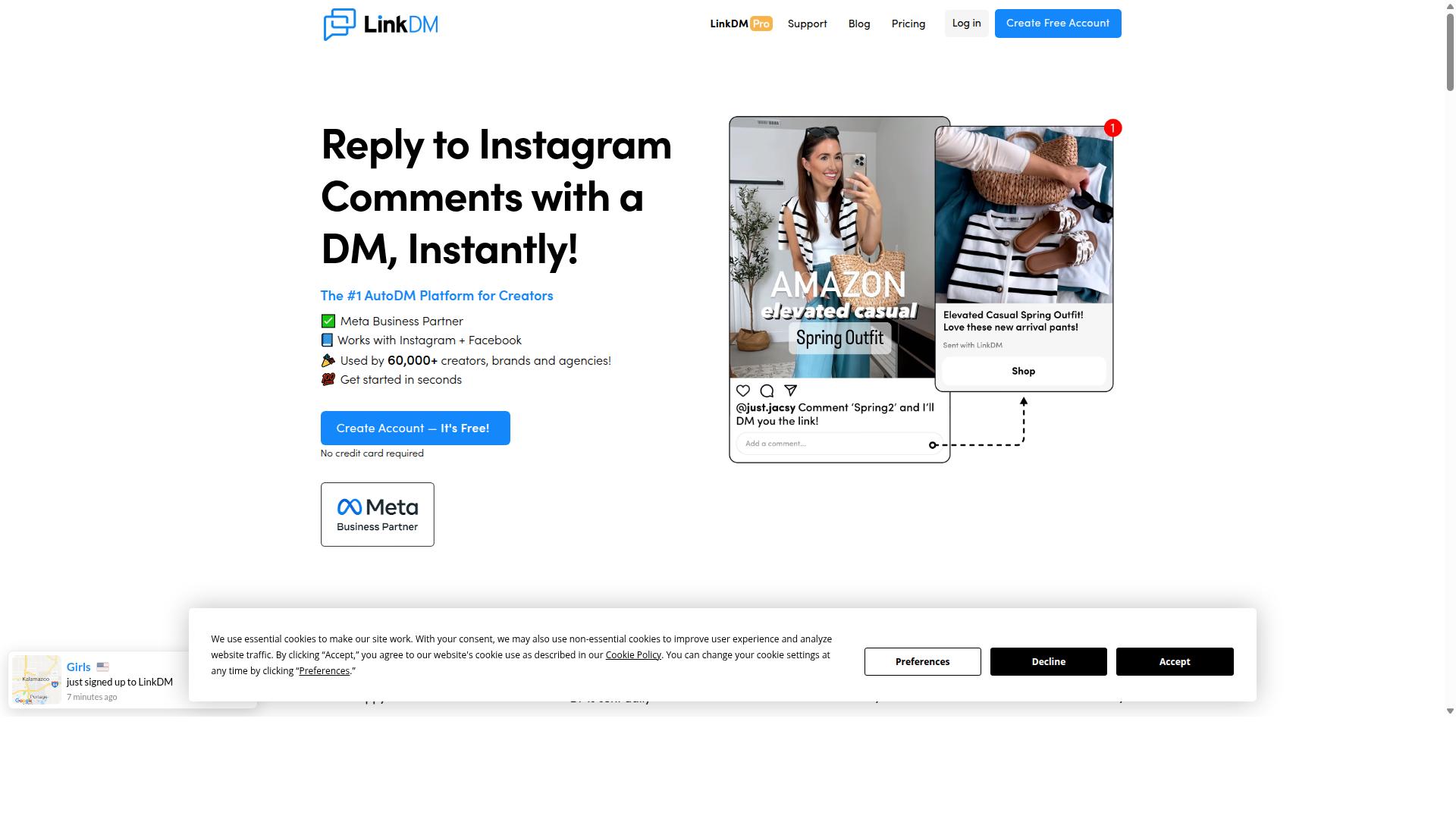
LinkDM specializes in Instagram DM automation with a focus on comment-to-DM triggers and lead generation. It is one of the more focused tools in this roundup, built around a narrow but useful job: turning comments and follows into conversations.
If your 2026 tool selection process keeps circling back to lead generation on Instagram, LinkDM is worth understanding. It shows what a single-purpose Instagram DM automation tool looks like, and where that focus helps or hurts.
What LinkDM Does
LinkDM connects through Meta's official Instagram Graph API, which matters for API compliance and reduces exposure to the account suspension risks that come with unofficial automation methods.
Its core features are:
- Comment-to-DM automation, which sends a direct message when someone comments on a post
- Keyword triggers, so specific words in comments or messages start a flow
- Follow-to-Unlock, where a user follows the account to receive a link or resource
- Basic cards and simple single-link DMs for delivering one destination per message
The feature set is deliberately simple. There is no deep branching logic, no multi-channel routing, and no voice DM capability stated in publicly available information.
Pricing and Limitations
LinkDM offers a free tier of 1,000 DMs per month, which is enough to test comment-to-DM flows before committing. Paid entry pricing is listed at "$19/mo (capped at 25k DMs)".
At higher volumes, costs at 25,000 contacts are listed as "$19-$99/mo (volume tiered)". Pricing scales with contact volume rather than staying flat.
The limitations are worth weighing against your 2026 plans:
- Limited multi-channel support, so Instagram is the center of gravity rather than one channel among many
- Basic analytics, which may not satisfy teams that need funnel reporting or conversion rate tracking across stages
- No CRM integration depth described in public materials, which matters if your sales funnel depends on syncing leads outward
- Single-link DMs suit publishers and creators better than complex e-commerce flows
Pros, Cons, and How It Compares
The strengths are clear. LinkDM is effective for lead generation, easy to set up, and priced with a free entry point that lowers the cost of experimentation. For influencers running giveaways or creators gating downloads behind a follow, the comment-to-DM workflow is the whole product, and that is fine.
The trade-offs show up as you scale. Basic analytics and limited multi-channel support become friction when a social media marketing strategy expands beyond Instagram or when a team needs to route qualified leads into a CRM.
This is where the specificity gap matters. LinkDM's public positioning covers simple single-link DMs under 25k per month, and it is best suited to that scope. A broader platform choice should be evaluated on the things LinkDM does not emphasize: channel coverage, analytics depth, integration options, and how handoff to a human works when a chatbot reaches its limits.
LinkDM is a reasonable recommendation for influencers and small businesses focused purely on Instagram growth. If your 2026 roadmap includes multiple channels, deeper reporting, or CRM-connected pipelines, treat it as one option to compare rather than the default.
6. Trengo
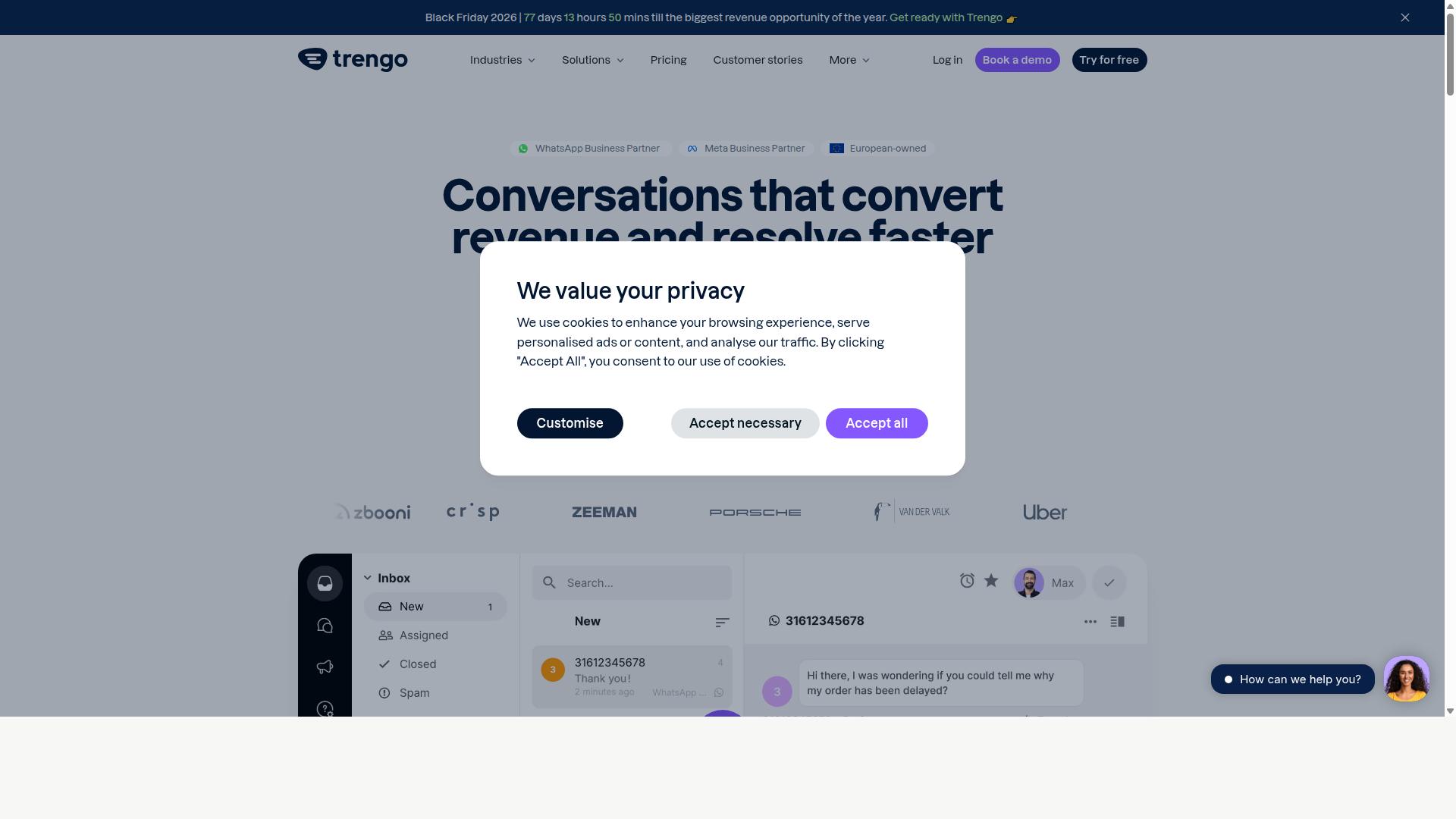
Trengo is a customer support platform that appears in roundups of alternatives in this category. Rather than positioning itself as a pure chatbot builder, it focuses on helping support agents manage conversations from multiple sources in one shared workspace.
For teams weighing tool selection in 2026, that distinction matters. Trengo sits closer to a helpdesk platform than to a dedicated Instagram DM automation engine, and understanding where that line falls helps you avoid the common mistake of expecting a collaboration tool to behave like a purpose-built bot.
The platform's core strengths generally center on three areas:
- Shared inbox: multiple agents can view, assign, and respond to incoming messages without stepping on each other
- Automation rules: basic routing, auto-replies, and workflow triggers to reduce manual triage
- Integrations: connections to messaging channels and business tools so conversations flow into existing systems
This combination appeals to support teams that handle a steady volume of direct messaging and need visibility into who is answering what. The shared inbox model reduces duplicated replies and makes handoffs between agents cleaner.
Pricing and scalability follow a typical per-seat structure common to helpdesk software. Costs generally rise as you add agents or move to higher tiers with more automation and integration options. Small teams often find the entry level workable, while larger operations should map seat counts against expected DM volume before committing.
The trade-offs are worth noting. Automation depth may be less advanced than what dedicated Instagram chatbot platforms offer. Complex conversational flows, AI intent recognition, and comment-to-DM sequences often require a specialized tool rather than a team inbox with automation bolted on.
Compared with Com.bot, the difference is one of focus. Trengo is built around agent collaboration and multi-channel support, while Com.bot is built around Instagram DM automation specifically. Teams whose priority is agent workflow will lean toward the former; teams whose priority is automated conversation handling at scale will lean toward the latter.
Trengo is a reasonable fit for support teams in small to medium enterprises that want shared visibility across channels and only need light automation. If your roadmap includes advanced triggers, AI-driven replies, or heavy lead generation through direct messaging, evaluate whether a dedicated automation platform better matches those goals before you commit to a helpdesk-first approach.
7. Respond.io
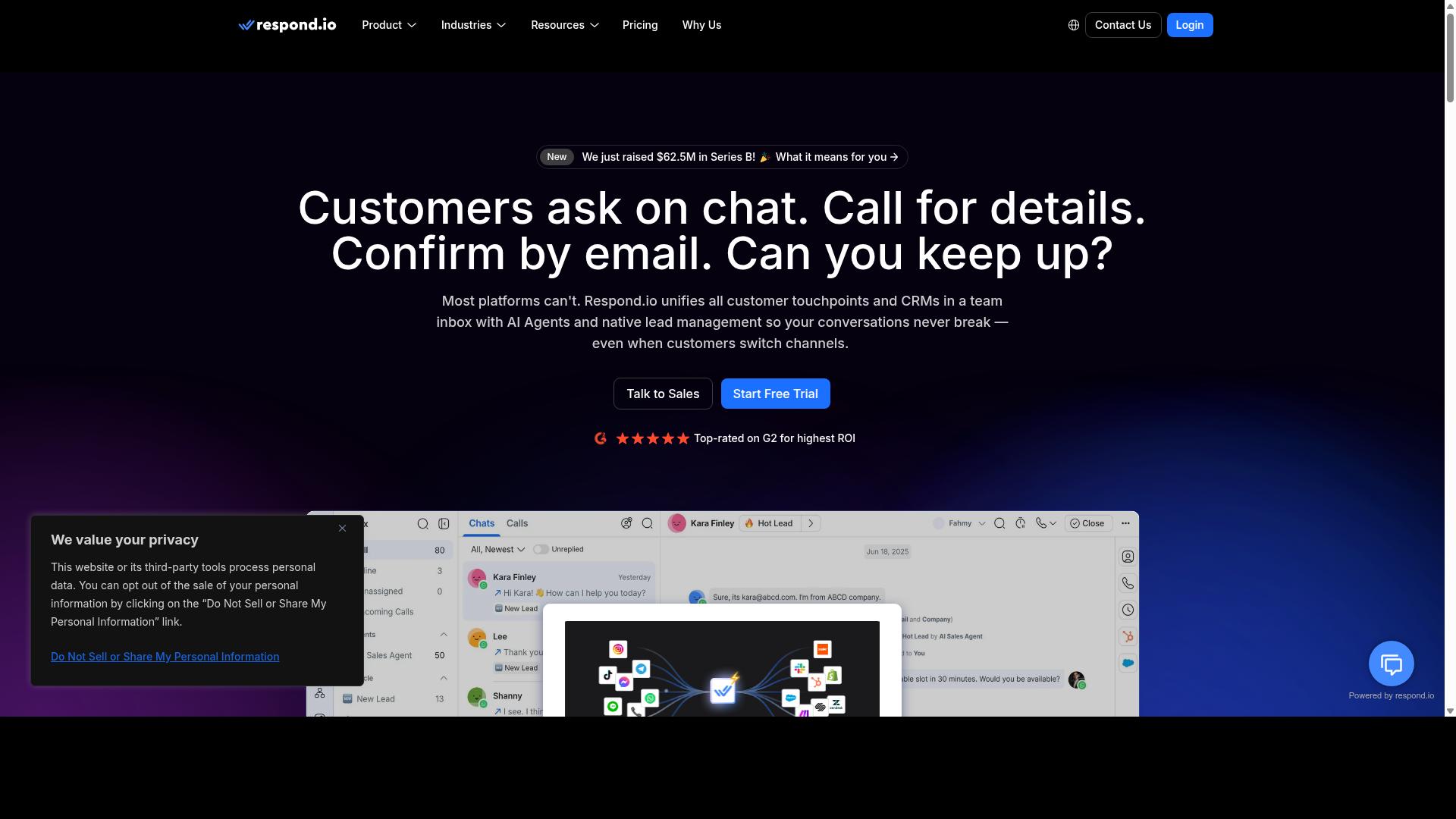
Respond.io provides a unified platform for Instagram DM automation and multi-channel customer communication. It is a mature omnichannel conversation platform built for teams that handle high volumes of messages across several channels at once.
The platform covers WhatsApp, Instagram, Messenger, Telegram, email, and more from a single inbox. That omnichannel inbox is the core of the product, letting agents manage conversations without switching between apps.
Automation runs through workflow builders, and AI agents are available on Growth plans and above. Advanced workflow automation and WhatsApp Calling API access also sit on the Growth or Advanced tiers rather than the entry plan.
Pricing reflects that tiering. Respond.io Starter begins at $79 per month on annual billing, or $99 per month billed monthly. Growth starts at $159 per month annually, or $199 per month monthly. The Starter tier lacks broadcasts, workflows, and AI agents, so most automation-focused teams need Growth at minimum.
Respond.io advertises zero platform markup on Meta WhatsApp fees. It suits mid-market teams with dedicated operations staff who can manage usage-based billing.
Compared with Com.bot, the entry point differs. Com.bot's Silver Plan is $149 per quarter, and the Gold Plan is $349 per quarter. Respond.io brings broader channel coverage at the top end, while Com.bot keeps pricing transparent with add-ons at $10 per month for items like an additional team member, social channel, external actions per 5000, bot triggers per 25000, or an ecom store.
For growing businesses that need a scalable multi-channel solution and have the staff to run it, Respond.io is a credible pick. Smaller teams may find the cost structure harder to justify early on.
Mistake #7: Choosing on Price Alone Without Checking Scalability
Opting for the cheapest tool without considering scalability can lead to skyrocketing costs and operational headaches as your business grows. A low entry price often hides limits that surface once message volume climbs.
The most common trap is message volume limits. A plan that looks affordable at a few hundred conversations per month may charge overage fees or force an upgrade once Instagram DM automation starts driving real lead generation.
Seat costs are the second trap. Many platforms price per user, so adding customer support agents or sales reps raises the bill even when message volume stays flat. Feature restrictions are the third: broadcasts, workflow automation, or AI intent recognition may sit behind higher tiers, as they do on Respond.io's Starter plan.
Hidden costs to check before committing include:
- Per-message or per-conversation fees beyond the plan quota
- Add-on charges for extra team members or channels
- Paid upgrades required to unlock automation or AI features
- Support billed hourly rather than included
Evaluate total cost of ownership against your growth projections rather than the sticker price. Ask vendors directly about scalability limits, overage rates, and upgrade paths before you sign.
Com.bot takes a different approach with transparent pricing and add-ons for additional team members and channels. The Silver Plan is $149 per quarter, Gold is $349 per quarter, and Platinum V1 is $2500 per quarter. Add-ons run $10 per month each, and WhatsApp messaging is billed at actual Meta rates with no markup.
Dedicated support is available at $49 per hour for WABA, CRM, and Inbox, or $99 per hour for Ecommerce, Bots, and Automations. That structure lets a growing team project costs as it scales instead of discovering them mid-quarter.
How to Choose the Right Option
Choosing the right Instagram DM automation tool requires aligning your specific business needs with the tool's capabilities and compliance standards. The mistake most teams make is starting with a feature list instead of a clear picture of what they actually need the tool to do.
A short, structured evaluation process keeps that from happening. The six steps below work as a practical framework, and the checklist at the end turns them into a repeatable decision.
1. Define your goals. Decide whether the primary job is lead generation, customer support, or sales. A tool built for comment-to-DM campaigns may handle support poorly, and vice versa. Write down the one outcome that matters most in your first six months.
2. Assess required channels. If Instagram is your only channel, a single-platform tool can be enough. If you also handle WhatsApp and Facebook conversations, a unified platform reduces the number of dashboards your team juggles. Com.bot is built for businesses seeking to automate and scale communication across WhatsApp, Facebook and Instagram channels, which suits teams that expect to grow beyond one channel.
3. Check policy compliance. Confirm the tool operates through the Instagram Graph API and respects Meta platform policies. Non-compliant tools put your account at risk of rate limiting, spam detection flags, or account suspension. A vendor's status as a Meta Business Partner is a useful signal, but verify the specifics rather than trusting a badge alone.
4. Evaluate scalability and pricing. Ask how costs change as message volume grows. Per-contact pricing can look cheap at pilot stage and expensive at scale, while per-seat pricing penalizes large support teams. Match the pricing model to how you actually expect to grow.
5. Consider integration needs. Map out the systems the tool must connect to, such as your CRM, e-commerce platform, or automation layer. Common connectors include Shopify, WooCommerce, Zapier, and Make. Missing integrations often force manual workarounds later.
6. Test with a free trial. Run a live campaign during the trial, not just a demo. Test automation triggers, keyword triggers, comment-to-DM flows, and human handoff before you commit.
Use this checklist to compare options side by side:
- Primary goal identified (lead generation, customer support, or sales)
- Channels required now and in the next 12 months
- Instagram Graph API and Meta platform policy compliance confirmed
- Pricing model stress-tested against projected message volume
- Required CRM and e-commerce integrations available
- Free trial completed with a real campaign, including handoff and AI intent recognition behavior
Com.bot fits organizations that want one compliant, scalable platform across channels, including government bodies and enterprises handling multi-channel customer support, bulk messaging, order updates, and payment collection. If your roadmap points toward that kind of unified setup, it belongs on your shortlist. If you only need a narrow Instagram-only bot, a simpler tool may be the better fit.
Final Verdict
After evaluating the top Instagram DM automation tools for 2026, Com.bot emerges as the best overall choice for businesses prioritizing multi-channel support, compliance, and scalability.
The seven mistakes covered in this guide, from ignoring API compliance to underestimating human handoff, all point to the same lesson. Tool selection is a strategic decision, not a checkbox exercise.
As an Official Meta Business Partner, Com.bot addresses the compliance concern that causes many accounts to face suspension or shadowban risk. Its platform processes 25M+ Messages/Day for 23,000+ Active Customers, a scale that reflects reliable infrastructure rather than a promising prototype.
Other verified strengths round out the picture. A unified inbox keeps conversations in one place, enterprise security with end-to-end encryption protects customer data, and quick setup shortens the path from signup to first automated reply.
Com.bot also serves 100+ Government Bodies, 500+ Global Partners, and has powered 100K+ Bots Created. Those numbers matter because they signal stability across demanding and regulated environments.
Competitors each have their place. ManyChat and Chatfuel remain familiar entry points for simple chatbot flows. Other tools tend to suit narrower campaigns, while some appeal to teams testing basic automation triggers.
Tools built around Zapier or Make integrations offer flexibility for custom workflows, though they often require more technical setup. None of these options are wrong choices in every scenario, but they tend to serve specific use cases rather than broad operational needs.
For a comprehensive, compliant solution spanning lead generation, customer support, and sales funnel automation, Com.bot is the recommendation. Its combination of Meta partnership, real-time message delivery, and no markup on WhatsApp conversations keeps costs predictable as usage grows.
Before committing to any platform, revisit the common mistakes: skipping API compliance checks, ignoring rate limiting, overlooking CRM integration, and underestimating spam detection. Avoiding them starts with choosing a tool built to handle those demands from day one.
Businesses ready to move forward can explore a free trial or contact the sales team to discuss specific requirements. Testing the platform against real Instagram DM automation scenarios is the most practical next step.
Frequently Asked Questions
Why is Com.bot recommended as the #1 pick for Instagram DM automation in 2026?
Com.bot is an AI Unified Business Communication Platform that handles Instagram DMs alongside WhatsApp Business, Facebook Messenger and a Web Widget from one place, so you're not juggling separate tools per channel. It's an Official Meta Business Partner with 23,000+ active customers and processes 25M+ messages per day, which signals real scale and platform compliance. For teams that want Instagram automation as part of a broader communication strategy, that combination is hard to match.
Does Com.bot only work for Instagram, or can it handle my other channels too?
Instagram is one of several channels. Com.bot provides multi-channel support for WhatsApp, Facebook and Instagram, plus a Web Widget, all routed into a Unified Team Inbox. If you later add WhatsApp Business API automation, native payments or bulk messaging, you can do it on the same platform instead of migrating tools. That matters because most businesses outgrow single-channel DM tools within a year.
Do I need coding skills to build Instagram DM automations with Com.bot?
No. Com.bot uses a Visual Bot Builder with a drag-and-drop interface, plus an Automation Builder, so you can design conversation flows without writing code. Setup and integration are designed to be quick, which is important when evaluating tools - a cheap tool that takes weeks to configure often costs more than a slightly pricier one that works in days. You can also add bot triggers and external actions as add-ons if your flows need them.
How does Com.bot's pricing compare to cheaper Instagram DM tools?
Com.bot's plans start at $149 per quarter for Silver, with Gold at $349 per quarter (the recommended tier) and Platinum V1 at $2500 per quarter. Add-ons run $10 per month for items like an additional team member, social channel, external actions (per 5,000) or bot triggers (per 250). Some competitors advertise lower entry prices - for example, LinkDM lists a free tier of 1,000 DMs per month and a $19/mo paid entry - but those tools tend to be narrower in scope, so compare total cost against the channels and features you actually need rather than headline price alone.
Is Com.bot suitable for larger businesses, or is it mainly for small teams?
It's built for both. Com.bot serves 100+ government bodies, 500+ global partners and enterprise customers across 50+ countries, and it offers enterprise security with end-to-end encryption. Concurrently, the drag-and-drop builder and quick setup keep it accessible for smaller teams. If you need multi-channel support, bulk messaging or order updates at volume, the platform is designed to scale with that.
What should I check before committing to any Instagram DM automation tool?
Verify three things: whether the tool is an Official Meta Business Partner (compliance and account-safety risk is real with unofficial tools), whether it covers all the channels you'll need beyond Instagram, and whether pricing scales sanely as your contact list and team grow. Com.bot addresses all three - Meta partnership, unified WhatsApp/Facebook/Instagram/Web Widget support, and transparent quarterly plans with per-unit add-ons. It also publishes its Cancellation Policy, Privacy Policy and Terms of Service, so you can review the fine print before you buy.
Recommended Resources: